How GPS pet collars work, how trackers differ from virtual fences, and what to know before choosing one.
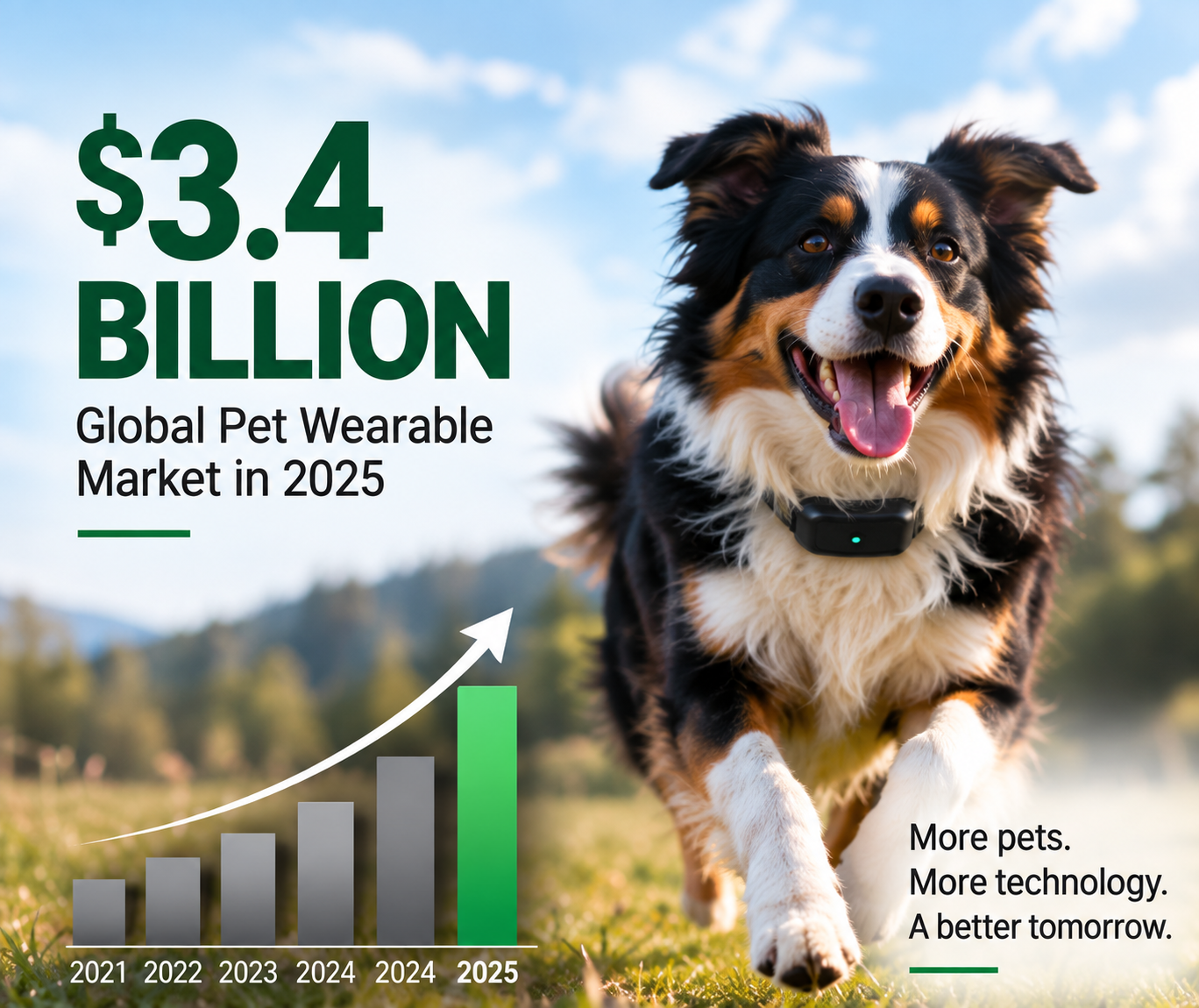
The global pet wearable market was worth about $3.4 billion in 2025, yet one of the most basic questions is still surprisingly confusing: what does a GPS pet collar actually do?
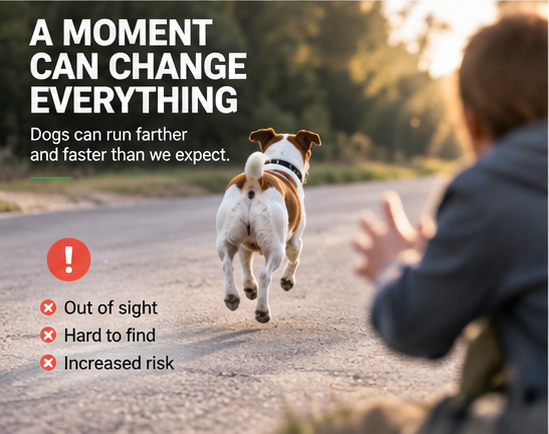
Picture your dog spotting a squirrel and sprinting toward the far edge of your property. You have only seconds to react.
Do you want technology that tells you where your dog went after it left? Or do you want a system designed to help manage the boundary before that happens?
And if you have a large yard, farm, or changing outdoor space, does the answer change?
It does.
That distinction is the key to understanding GPS pet collars.

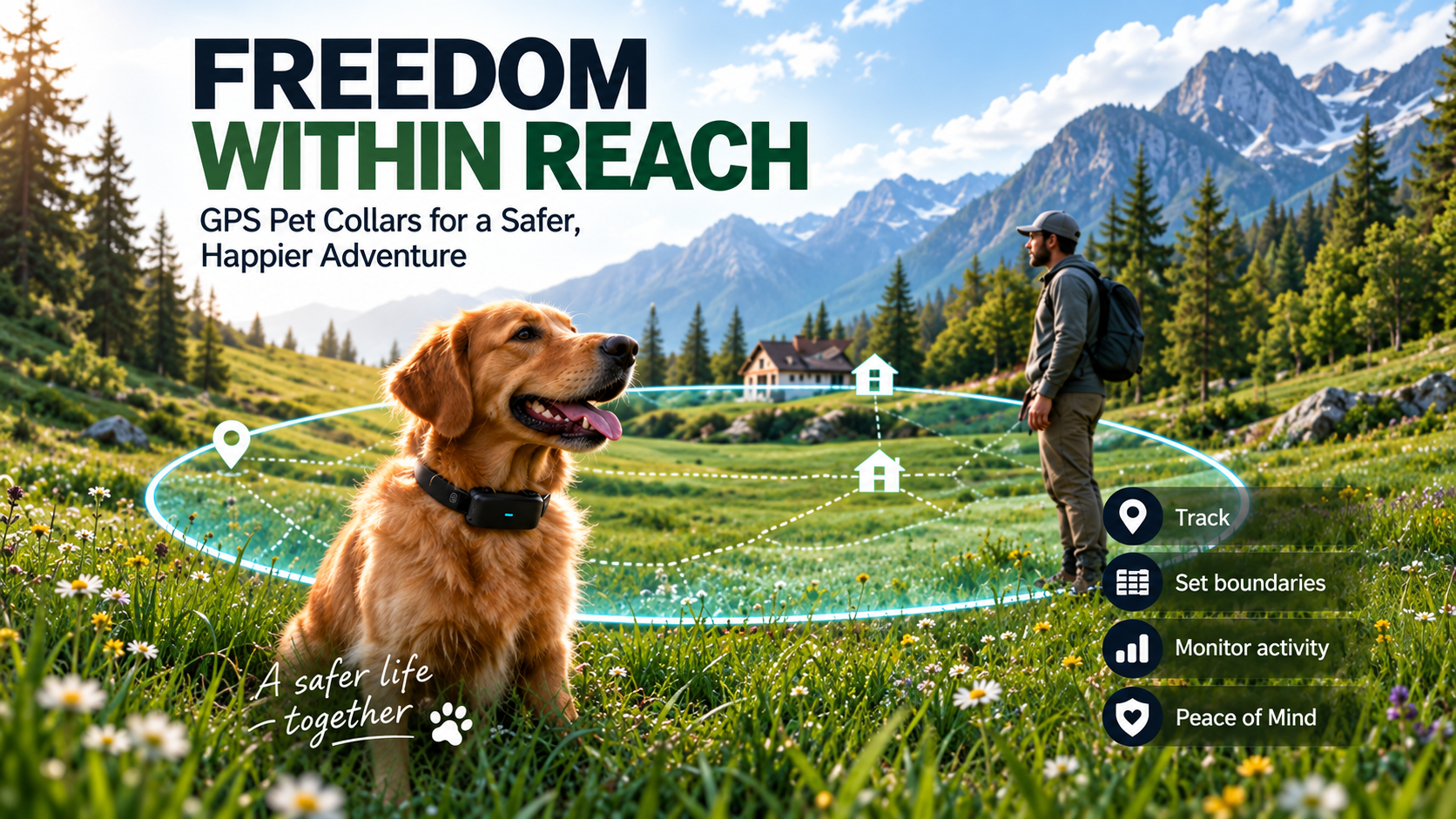
A GPS pet collar is a wearable device that uses satellite positioning to support functions such as location tracking, boundary management, activity monitoring, or a combination of these features.
The important part is that “GPS pet collar” describes a category, not one single type of product.
Some GPS collars are primarily trackers. They determine a pet’s location and use a separate communications system to send that information to an owner, often through a phone or connected service.
Other products are GPS fence collars. They also determine location, but they use that information differently.
Instead of focusing on showing you a moving dot on a map, a GPS fence can compare the collar’s current position with a boundary that has already been established.
If the dog remains inside that area, nothing needs to happen.
If the dog approaches or crosses the boundary, the collar can provide a warning or training cue.
That means two products can both contain GPS technology while solving very different problems.
One helps answer:
“Where is my dog?”
The other is designed around:
“Is my dog still inside the area I defined?”
Before comparing features, prices, range, or battery life, determine which of those questions matters more to you.
For a broader introduction, see our GPS dog fence manufacturer guide.
GPS gives the collar location information; what the device does with that information determines the product’s real purpose.
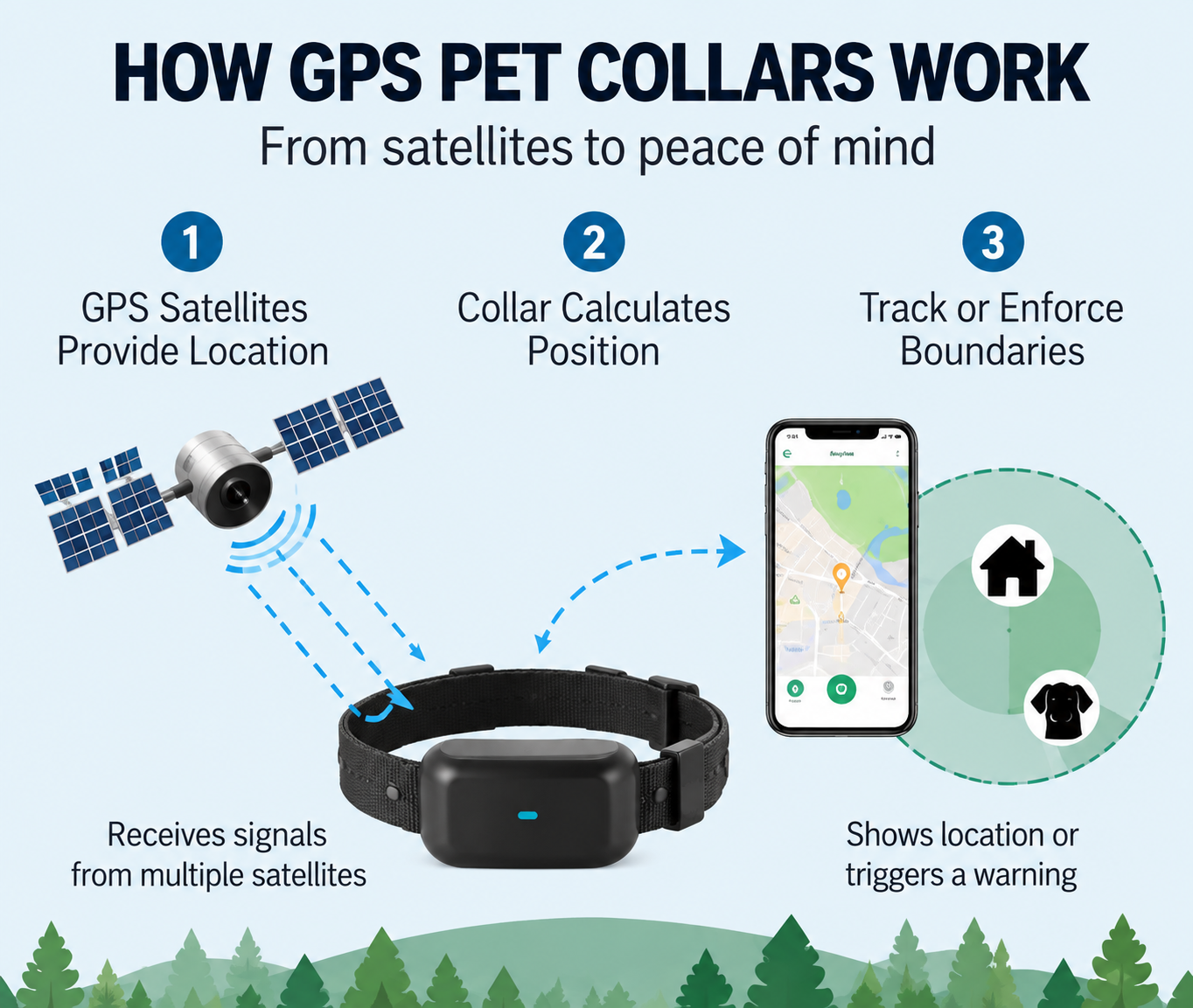
A GPS receiver inside the collar listens for signals from navigation satellites. Using information from multiple satellites, it calculates its position.
For a tracking collar, another communication layer may then transmit that position to an external service or device.
A GPS fence works differently.
Think of the system as creating an invisible circle.
First, the user establishes an origin or center point. Then the user selects a permitted radius around that point.
Once the system knows both pieces of information, it can repeatedly ask a simple question:
How far am I from the center?
That distance determines whether the collar is still inside the permitted area.
No underground wire has to define the circle. No physical fence has to follow its edge.
The boundary exists digitally.
That simplicity is one reason GPS fence systems can be useful on properties where installing a permanent perimeter would be inconvenient.
But satellite positioning also comes with environmental limits.

GPS works best when the receiver has a good view of the sky, so location technology should never be treated as magic.
The NAX100, for example, is designed to acquire its satellite position outdoors in an open area. Initial positioning typically takes about one to two minutes, and buildings, obstacles, and some weather conditions can affect reception.
That matters.
A device designed for an open field should not automatically be expected to perform the same way in a basement, between dense high-rise buildings, or under heavy overhead obstruction.
This is something I would check before getting excited about maximum-range numbers.
A specification tells you what a product is designed to do. Your environment determines whether that specification is useful to you.
For a GPS-based fence, testing the actual property should therefore be part of setup—not an afterthought.
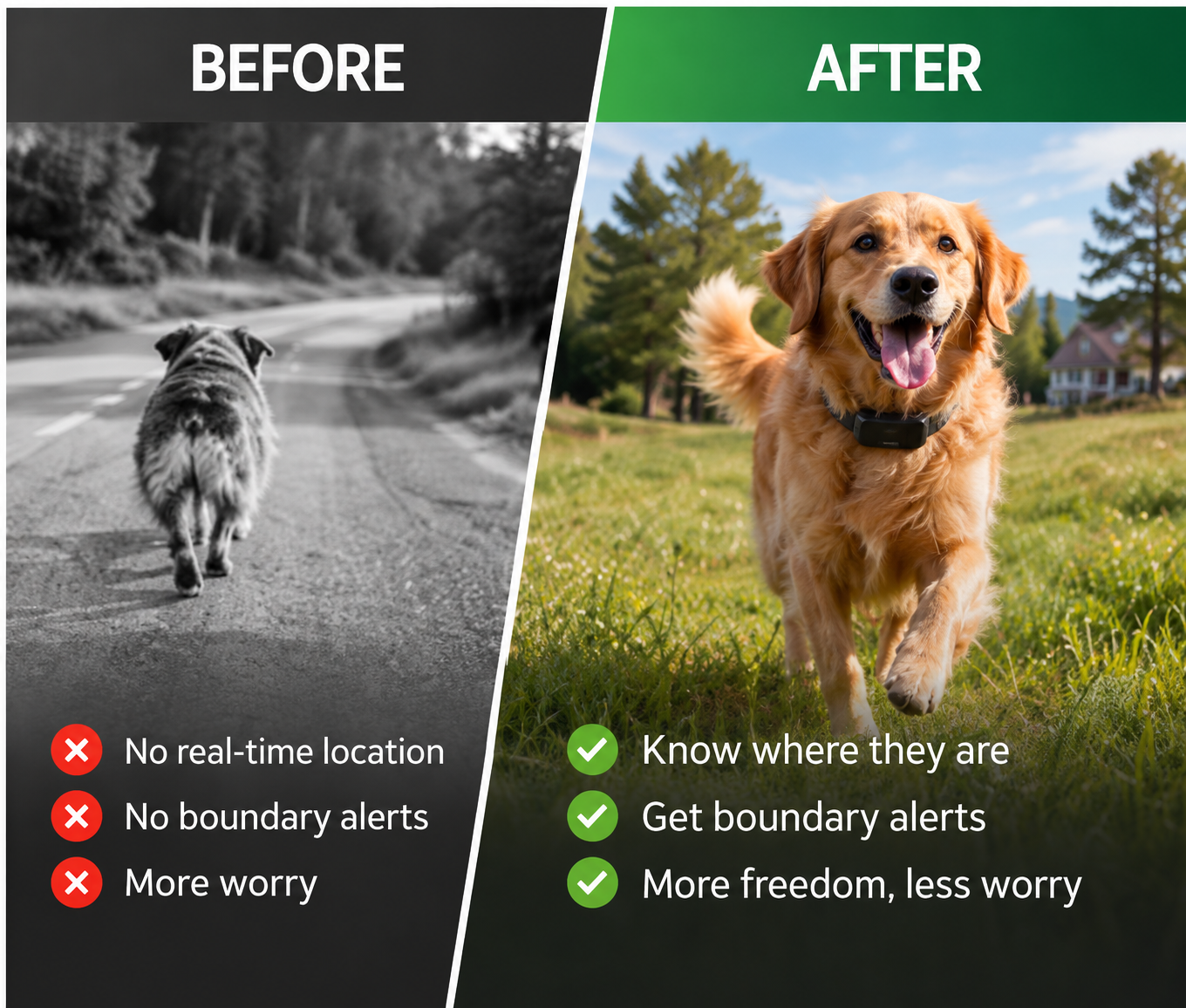
Tracking is mainly about recovery; a GPS fence is mainly about boundary management.
Imagine your dog has already left the yard.
With a location tracker, you want to know where the dog is going so you can find it.
That capability can be extremely valuable when lost-pet recovery is your main concern.
Now move the clock backward.
Your dog has not left yet. It is simply moving toward a part of the property you have decided should be the limit.
A GPS fence is built around that earlier moment.
The collar compares its position with the predetermined safe area and can provide a trained warning as the dog approaches or crosses the boundary.
Neither concept is automatically better.
They serve different priorities.
If your biggest concern is finding a dog after an escape, focus closely on real-time tracking capabilities.
If your challenge is giving a dog more room on a large open property while still defining an intended activity area, a GPS fence may make more sense.
And if you need both, do not assume that every product labeled “GPS” automatically provides both.
There is another important distinction.
A virtual fence is not a physical barrier.
It cannot physically stop a determined dog.
It should be viewed as a boundary-management and training system, not as an invisible wall that guarantees containment.

Most people do not start researching GPS fences because they love gadgets. They start because an existing management method is no longer fitting their property or lifestyle.
This last issue is particularly important.
The Naxwave NAX100 allows a circular safe-area radius to be adjusted from 30 meters up to 1,000 meters and supports audible, vibration, and optional static-stimulation modes.
The goal should never be “more correction.”
The goal is a clear, repeatable boundary signal that can become part of structured training.

The following is an illustrative training scenario, not customer test data or a product-performance guarantee.
Imagine an owner with a large open residential property.
The dog is energetic and normally stays reasonably close. But squirrels and other fast-moving animals immediately trigger a chase.
The owner’s problem is not that the dog is “bad.”
The environmental reward is sometimes stronger than a distant verbal recall.
The owner spends one week keeping a simple record.
In this hypothetical example, the dog makes eight clear attempts to rush past the intended activity area.
Sometimes the recall command works.
Sometimes the owner has to walk over and bring the dog back.
Eight incidents become the baseline.
Now the owner can measure change instead of relying on memory.
Rather than putting on a GPS fence collar and immediately allowing unrestricted freedom, the owner starts with a leash.
A smaller, easy-to-supervise boundary is established first.
With the Naxwave NAX100, the adjustable radius begins at 30 meters and can be expanded gradually up to 1,000 meters depending on the property and training situation.
The dog approaches the training boundary.
A cue occurs.
The owner guides the dog back.
The dog returns.
The return is rewarded.
Then they repeat it.
The technology is only one part of the process. Consistency gives the signal meaning.
Suppose the owner records only two clear boundary-crossing attempts during the second week.
In this illustrative example, incidents fall from eight to two—a 75% reduction.
That number is not a claim about expected product performance.
It demonstrates a better way to evaluate training.
Instead of asking, “Does my dog seem better?” record what actually happens:
How many boundary attempts occurred?
How many times did the dog turn around after the cue?
Which distractions caused failures?
Did performance change as the allowed area became larger?
Measurement makes training easier to understand.

GPS does not train a dog by itself; it converts location into a consistent signal that training can give meaning to.
The process begins with a problem: an owner cannot physically stand along every meter of a large property boundary.
A GPS fence addresses the location part of that problem.
The system establishes a center point, stores a selected radius, and compares the collar’s current location with that radius.
The next step is converting distance into something the dog can perceive.
With the Naxwave NAX100, an audible warning begins when the dog is about one meter from the configured boundary. If the dog continues beyond the safe area, the system can progress to vibration and optional static stimulation according to the selected settings. When the dog returns to the safe zone, the active correction stops.
The device also allows the stimulation functions to be configured rather than treating every dog identically.
But one of the first specifications I would examine is not maximum intensity.
It is the stopping logic.
The NAX100 includes an over-correction protection sequence. Vibration and static stimulation operate in limited cycles: each cycle spans 30 seconds, with stimulation lasting 18 seconds, and each mode is limited to three cycles. When both are active, the programmed vibration sequence occurs before the static sequence, and the correction stops after the defined cycles even if the dog remains outside the safe area. The audible warning is handled differently and is not subject to the same three-cycle limit.
That is a more useful design question than simply asking, “How strong can it get?”
A thoughtful boundary-training routine should aim for a dog that learns:
Boundary cue → stop moving outward → turn back → return to the safe area.
The technology makes the cue consistent.
Training makes the cue understandable.
The broader pet-tech market is moving from simple identification and tracking toward systems that combine location, safety, behavior, and other forms of monitoring.
Grand View Research estimates that the global pet wearable market was worth approximately $3.4 billion in 2025, will reach about $3.8 billion in 2026, and could grow to $11.4 billion by 2033, representing a projected compound annual growth rate of 16.8% from 2026 to 2033. Its 2026 report also identifies smart collars as the largest product category in 2025 and GPS as the fastest-growing technology segment over the forecast period.

The underlying pet market remains substantial as well. The American Pet Products Association reports that 95 million U.S. households owned at least one pet in 2025, while dog ownership reached 53% of U.S. households. U.S. pet-industry expenditure reached $158 billion in 2025 and is projected by APPA to reach $165 billion in 2026.
Those figures do not mean every dog needs a smart collar.
They do show why companies are investing in better tools for pet safety, monitoring, and daily management.
From a product-development perspective, the next meaningful step is unlikely to be simply adding more features.
The bigger questions are whether location, boundary, and behavioral information can work together without making the product harder to use; whether battery and fit support everyday ownership; and whether the technology actually reduces an owner’s workload.
More features do not automatically create a smarter experience.
That will matter increasingly as pet wearables mature.
Good setup and basic training habits matter more than rushing to test the limits of the device.
Walk through the area where you plan to use the collar before beginning boundary training.
Confirm that satellite positioning can be established reliably, and compare open areas with locations near major obstacles.
For the NAX100, a full charge takes about three hours, so starting with a charged device should be part of first-time setup.
Expected result: Test at least two or three locations within seven days and identify the most reliable area for establishing your center point.
Use a training leash at first.
Approach the planned boundary, pair the device cue with a consistent recall command, guide the dog back, and reward the return.
Repeat the sequence rather than waiting for a full-speed boundary crossing.
Expected result: Complete at least 20 measurable boundary-training repetitions this week and record how often your dog turns back successfully.
A collar that is too loose can reduce consistency. A collar that is too tight can create discomfort.
Check the battery before use and inspect the contact area regularly if a contact-based training mode is enabled.
The NAX100 instructions recommend appropriate collar tension and state that the collar should not be left on a dog for more than eight hours per day.
Expected result: Build a one-minute pre-use routine that reduces interruptions caused by low battery, poor fit, or skin discomfort.
A GPS pet collar is a category, not one specific product. Some devices focus on tracking; others focus on virtual boundary management.
Decide whether your biggest problem is “Where is my dog?” or “Is my dog still inside the intended area?”
GPS performs best in suitable outdoor conditions. Buildings and other obstructions can affect satellite reception.
A GPS fence is not a physical barrier. It is a location-based boundary and training tool.
Technology provides consistency; training provides understanding. A dog still needs to learn what the boundary cue means.
A small label—GPS—can make very different products appear almost identical.
But GPS is only the location technology underneath the product.
The important question is what happens after the device knows where it is.
If your main concern is finding your dog after an escape, prioritize real-time location-tracking features.
If your challenge is managing a flexible activity area on a large yard, farm, or open property, investigate GPS virtual-fence systems.
If both needs matter, look specifically for a solution that supports both rather than assuming every GPS collar does.
Define the problem before choosing the technology.
It is one of the simplest ways to avoid buying the wrong device.
What is the biggest challenge you have faced when keeping your dog within a safe boundary?
Do you think GPS virtual fences will become a more common complement to traditional physical fences?
Which matters most to you right now: boundary control, location tracking after an escape, or more reliable recall training?
Tag or share this guide with a dog owner who is still trying to figure out how much freedom is safe on a large property.
#GPSPetCollar #GPSDogFence #WirelessDogFence #DogTrainingCollar #PetSafety #PetTech #SmartPet #DogTraining #Naxwave #NaxwavePet
For product specifications and setup information, see the NAX100 GPS Wireless Dog Fence. Continue with Seven GPS Dog Fence Concepts for Beginners when comparing options for your dog and property.