GPS Dog Fence Guide #01: Can a GPS Collar Really Keep Your Dog in the Yard?
Knowing where your dog is does not necessarily mean your dog is safe.
Many GPS pet devices can tell owners where their dog is now and where it has recently been.
But if your dog has already run out of the yard and is moving farther away, knowing its location at that point means you have already entered another stage—finding the dog.
The real problem many dog owners struggle with happens earlier:
Is there a way to help a dog understand “this is where I should stop” before it actually runs too far away?
What if your dog has excellent recall but suddenly ignores you when it sees a squirrel, a vehicle, or another dog?
What if you live on a large property, farm, or rural residence where installing a physical fence would be too expensive?
What if what you really need is not to find your dog after it runs away, but to reduce the chances of it running away in the first place?
This is exactly where GPS tracking and GPS boundary management are most often confused.
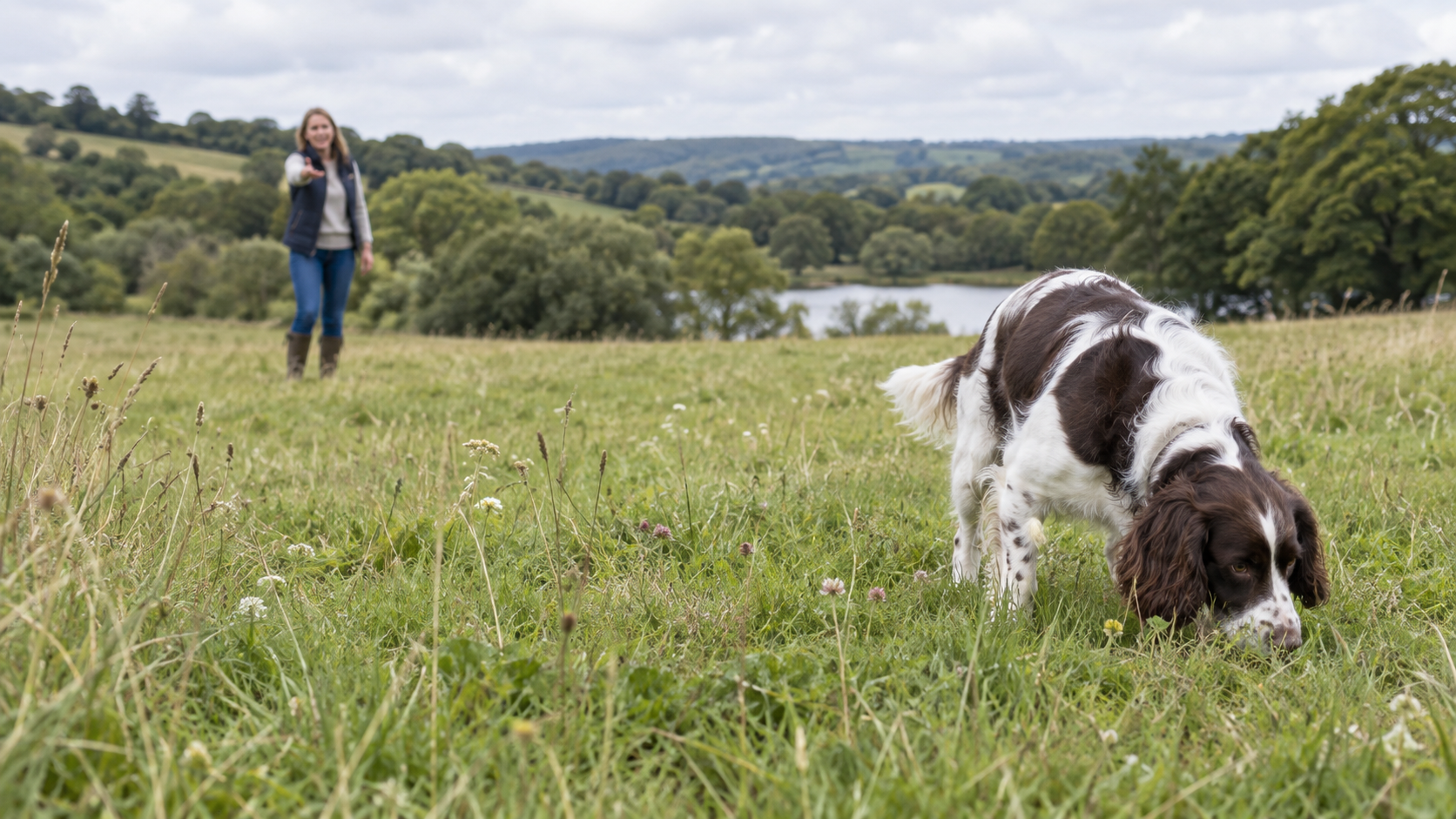
The Real Issue Is Not GPS Accuracy, but Whether the Dog Understands the Boundary
GPS can know where a dog is, but coordinates alone do not teach a dog where to stop.
It is easy to assume that “GPS tracking” and a “GPS dog fence” are the same thing.
In reality, they solve completely different problems.
The most important question a standard GPS tracker answers is:
“Where is my dog right now?”
A GPS Dog Fence focuses on a different question:
“How far should my dog be allowed to roam?”
These questions may sound similar, but the actual user experience is very different.
Dogs do not understand latitude and longitude.
They will not automatically stop simply because the GPS system knows they have moved 100 meters away.
What they can understand is:
Approaching a certain area.
Receiving a consistent warning.
Changing direction.
Gradually developing an understanding of the boundary through repeated experiences.
Therefore, a system designed for pet boundary management should at least create this logic:
Boundary → Warning → Behavioral response → Repetition
That is why I have always believed that when evaluating a GPS dog fence, you should not look only at “how accurate is the GPS?”
Accuracy is certainly important.
But if the system cannot ultimately turn location data into boundary-related behavior that the dog can understand, then it has only completed part of the overall safety-management process.
Some GPS pet devices rely on an app, SIM card, or ongoing subscription so owners can check their dog’s location remotely.
These products are highly suitable for solving “tracking and finding” problems.
A standalone GPS fence system addresses a different need:
Creating a virtual boundary within the area where the owner and dog regularly spend time—a boundary that can be trained and used repeatedly.
Neither type of product is necessarily better than the other.
The key is understanding what problem you actually want to solve.

6 Problems Dog Owners Often Discover Too Late
Many boundary-management problems do not seem serious at first.
The dog simply walks a few dozen meters farther than it did yesterday.
It occasionally ignores a recall command.
It sometimes reaches the edge of the yard.
But when these behaviors continue to repeat, the risk begins to increase.
1. Your Dog Knows the Yard but Does Not Know Where the Real Boundary Is
You may walk your dog in the same yard every day.
Your dog may recognize the house, the grass, and the surrounding environment.
But being familiar with an environment is not the same as understanding its boundaries.
Without a physical fence, the dog sees one continuous open space.
It does not know which part of the grass belongs to you or at what point it has gone too far.
Today, it walks 50 meters.
Tomorrow, 70 meters.
The day after that, it may be 100 meters.
On the surface, the dog is simply walking farther and farther. In reality, it has never developed a stable stopping point.
For the owner, the eventual cost is clear:
Whenever the dog is outdoors, someone has to keep watching it.
An outdoor activity that should feel relaxed gradually becomes a form of constant supervision.
2. Recall Works Well—Until Something More Interesting Appears Outside
This is one of the easiest ways for owners to develop a false sense of security.
Many dogs have excellent recall in calm environments.
You call.
The dog comes back.
So the owner naturally thinks:
“My dog is obedient. It will not run away.”
The problem usually appears when the environment suddenly changes.
A rabbit runs past.
Another dog appears.
Someone walks by in the distance.
A vehicle moves.
A new scent captures the dog’s attention.
At that moment, the owner’s voice is competing with a much stronger stimulus.
A failed recall does not necessarily mean the dog has not been trained properly. It may mean the training environment has suddenly become much more difficult.
The real danger is that many owners only realize this after the first serious escape.
3. Large Yards, Farms, and Rural Properties Are Not Suitable for Every Physical-Fence Solution
If you only have a small yard of a few dozen square meters, a physical fence is often a straightforward solution.
But as the property becomes larger, the situation becomes more complicated.
You need more fencing materials.
More installation work.
The terrain may include slopes, trees, roads, or temporary work areas.
On a farm, ranch, or vacation property, the dog’s activity area may also change frequently.
At that point, the question is no longer:
“Can a fence be installed?”
It becomes:
“Is it worth permanently fencing off every area where the dog may move each day?”
Sometimes the answer is yes.
Sometimes it is not.
4. A GPS Tracker Tells You the Dog Has Left, but the Problem Has Already Happened
This is one of the most important differences between a GPS Tracker and a GPS Fence.
Suppose your phone suddenly displays an alert:
Dog left safe zone.
That alert is certainly useful.
At least you know the dog has left.
But what happens next?
You still need to open the map.
Confirm the location.
Go out and search.
Bring the dog back.
In other words, the system is dealing with:
What happens after the dog crosses the boundary.
Boundary management focuses more on:
What happens before the dog crosses the boundary.
These two product concepts should not be confused.
Finding the dog is important.
Reducing the chance that the dog actually runs away is a different goal.
5. Fencing and Training Often Become Two Separate Systems
Many owners initially want to solve only one problem.
For example:
“I just do not want my dog to go too far.”
But during actual use, a second question quickly appears:
What should you do if the dog approaches the boundary and does not come back?
At that point, the owner may need:
A fence device.
A remote training device.
Another display device.
Possibly a separate mobile app as well.
A seemingly simple pet-safety problem eventually becomes a process of switching between multiple devices.
For most everyday users, long-term usability is often determined not by how many features a product has, but by:
How much effort does it require every day?
This is one of the product challenges that Naxwave NAX100 is designed to address: combining GPS boundary management, remote training, and real-time distance awareness within one workflow instead of requiring owners to switch between several independent systems.
6. Seeing Your Dog Does Not Mean You Know How Far Away It Really Is
In a small yard, this may not be a problem.
But on a farm, large property, camping site, or open field, distance can be difficult to judge accurately.
You may think your dog is only 50 meters away.
In reality, it may already be more than 100 meters away.
When the terrain is open and there are no obvious reference points, people are not particularly good at estimating distance by sight alone.
This creates a very practical problem:
Owners often take action only after the dog “looks a little too far away.”
By then, the dog may already be in a much harder-to-control area.
If the controller can directly tell the owner how far away the dog is, the management approach changes.
You are no longer relying only on intuition.
You have a clear number to work with.
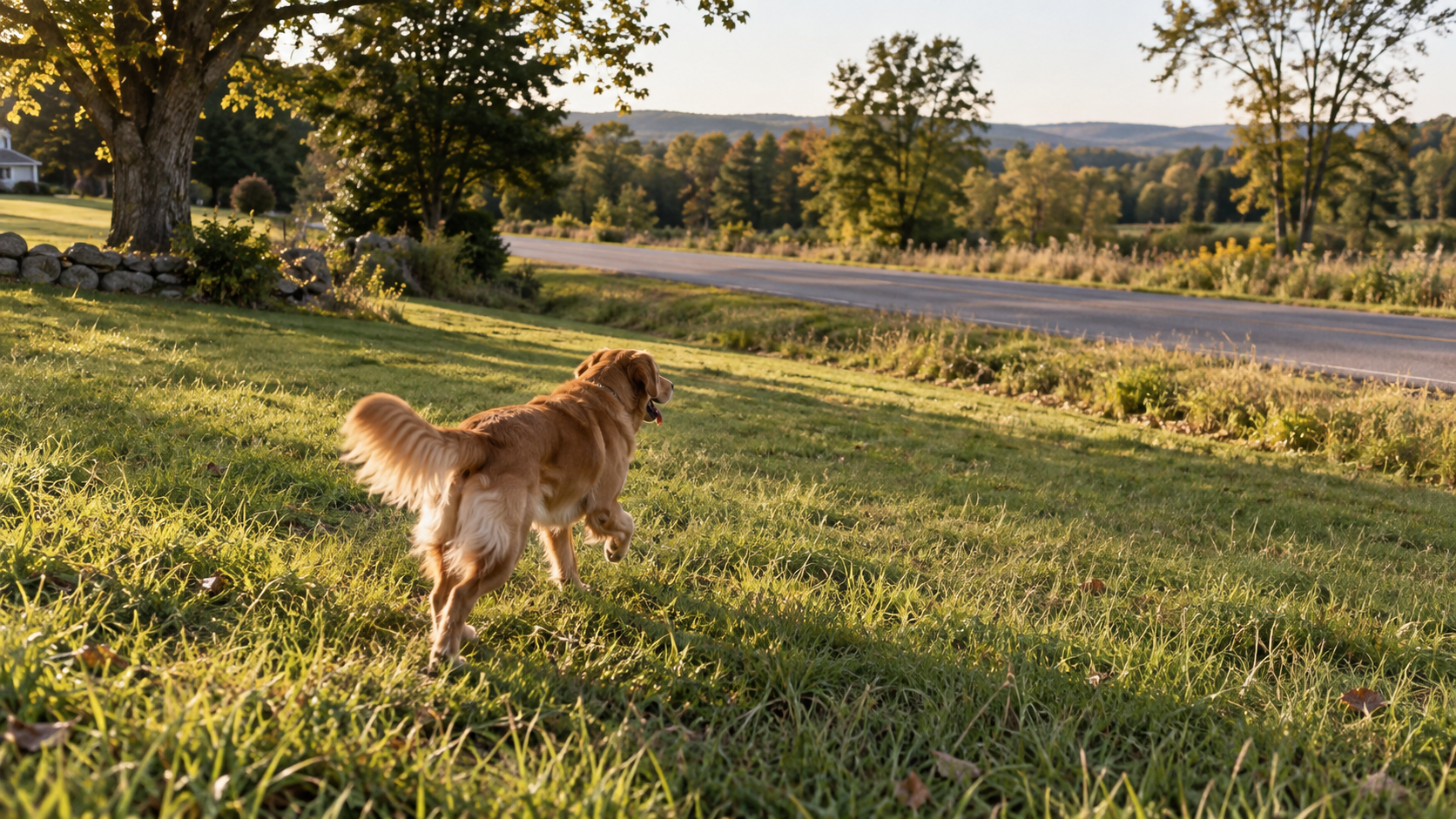
Before & After: What Happens When a Dog Begins to Understand the Boundary?
One point needs to be emphasized here:
The following two examples are illustrative composite cases based on common usage scenarios. They are not presented as actual test reports from specific customers.
For a broader introduction, see our GPS dog fence manufacturer guide.
Case 1: A Labrador on a Large Property
Imagine an owner living in a large suburban property.
The family Labrador is friendly and generally has good recall.
The problem only appears outdoors.
Before
At first, the dog simply follows scents along the edge of the property.
After a few days, it begins to walk farther away.
Most of the time, it still comes back when called.
But when another animal appears, its attention shifts completely.
The most exhausting part for the owner is not that a serious escape happens every day.
It is this:
The owner does not know which ordinary moment of “walking a little farther” will suddenly become a real boundary violation.
So whenever the dog goes outside, the owner has to keep watching constantly.
This is a very typical form of management pressure.
The Change
The owner first sets a relatively conservative circular GPS boundary.
The dog is not given complete freedom immediately.
Instead, the owner conducts repeated training near the boundary.
The dog approaches the restricted area.
It receives a warning.
The owner reinforces recall.
The dog returns to the safe area.
Repeat.
The important point is not simply correcting the dog once.
It is helping the dog gradually understand:
When I receive a warning in this location, I should change direction.
After
After a period of training, the owner begins recording:
How many times the dog approaches the boundary each day.
How many times it actually attempts to cross it.
How many recalls are successful.
How many times the owner needs to intervene directly.
In this example, the role of Naxwave NAX100 is not to train the dog on the owner’s behalf. Instead, it places GPS boundary management and remote training within the same management process, making it easier for the owner to maintain consistent feedback.
The most valuable change is not an exaggerated “success rate.”
It is this:
The owner shifts from “constantly watching the dog” to “managing the dog based on its boundary behavior.”
That is a major difference.
Case 2: A Border Collie on a Farm
The second scenario is useful for explaining why distance matters.
Imagine a Border Collie living on a large, open farm.
Before
The dog moves quickly.
It also covers a large area.
The owner can usually see it.
But being able to see the dog does not mean the owner can judge its distance accurately.
Once the dog moves farther away, it becomes difficult to tell by sight whether it is 60 meters or 150 meters away.
Some areas of the farm may also be unsuitable for permanent fencing.
What the owner really needs is a management method that can adapt as the usage environment changes.
After
The owner creates a temporary GPS boundary around the area being used that day.
Consistent training is carried out when the dog approaches the restricted area.
At the same time, the owner uses the remote controller to monitor the actual distance.
This gives the owner three layers of information:
Whether the dog is approaching the boundary.
Whether the dog is responding to the training command.
How far the dog is from the owner.
The value of Naxwave NAX100 in this type of scenario comes from combining GPS fencing, remote training, and distance display within one workflow.
Not three completely separate tools.
One continuous management logic.
Where the dog is.
Whether it is approaching the boundary.
Whether it is responding.
How far it is from the owner.
How Does a GPS Boundary Collar Actually Solve the Problem?
At this point, the product logic can be broken down more clearly.
A GPS Dog Fence generally needs to go through four steps to solve the problem effectively.
Step 1: Establish a Clear Boundary
A dog cannot see a virtual line, so the system must first define where the boundary is.
GPS determines the relationship between the device’s current location and the preset center point.
The owner sets an activity area.
The dog can move freely within that area.
As the dog gradually approaches the boundary, the system begins its warning process.
The biggest difference from a physical fence is that there is no actual wall.
That makes the training process behind the system especially important.
A virtual boundary cannot exist only inside the electronic device.
Ultimately, it must also exist in the dog’s behavioral understanding.
Step 2: Make the Boundary Meaningful to the Dog
If GPS only knows:
“The dog has reached the boundary.”
But the dog has no idea what is happening, then the system is still incomplete.
The real training logic is to help the dog gradually form an association.
Approach this area.
Receive a consistent warning.
Change direction.
The warning stops.
Through repeated practice, the boundary changes from “a circle inside a device” into a behavioral rule the dog can understand.
This is why combining remote training with a GPS fence can be more meaningful than providing coordinate information alone.
However, one point must be emphasized:
Training is not a matter of pressing a button once.
It is a process.
The system simply helps the owner keep the warning method consistent.
The dog still needs repetition, timing, and proper training to develop a real understanding of the boundary.
Step 3: Let the Owner Know the Distance Before the Dog Runs Too Far
Many systems only tell the owner:
Inside.
Outside.
But there is another important piece of information in between:
How far away is the dog, exactly?
For example, the dog may not have crossed the GPS boundary yet.
But it may already be far away from the owner.
At that point, the owner may want to recall the dog proactively.
The Naxwave NAX100 controller includes distance display, along with signal and battery status.
The value of this information is not simply that “the screen has more features.”
It gives the owner a more concrete basis for making decisions.
50 meters.
100 meters.
150 meters.
A number is much clearer than “the dog looks a little far away.”
This is especially useful in large, open environments.
Step 4: Reduce the Complexity of the Entire Process
Whether a pet product is truly easy to use cannot be judged by its specifications alone.
You also need to consider how the owner uses it every day.
If the owner has to do the following before going outside in the morning:
Open an app.
Check the SIM card.
Confirm the subscription.
Connect a separate training remote.
Check a third device.
Then even a product with many features may become inconvenient over time.
An integrated system should solve the usage path.
Naxwave focuses the NAX100 product architecture on three core tasks:
GPS boundary management.
Remote training.
Real-time distance awareness.
These three functions are naturally connected.
Where the dog is.
Whether the dog is approaching the boundary.
Whether the dog is responding.
How far the dog is from the owner.
All of this information serves one shared goal:
Giving the dog more freedom to move while allowing the owner to maintain the necessary level of control.
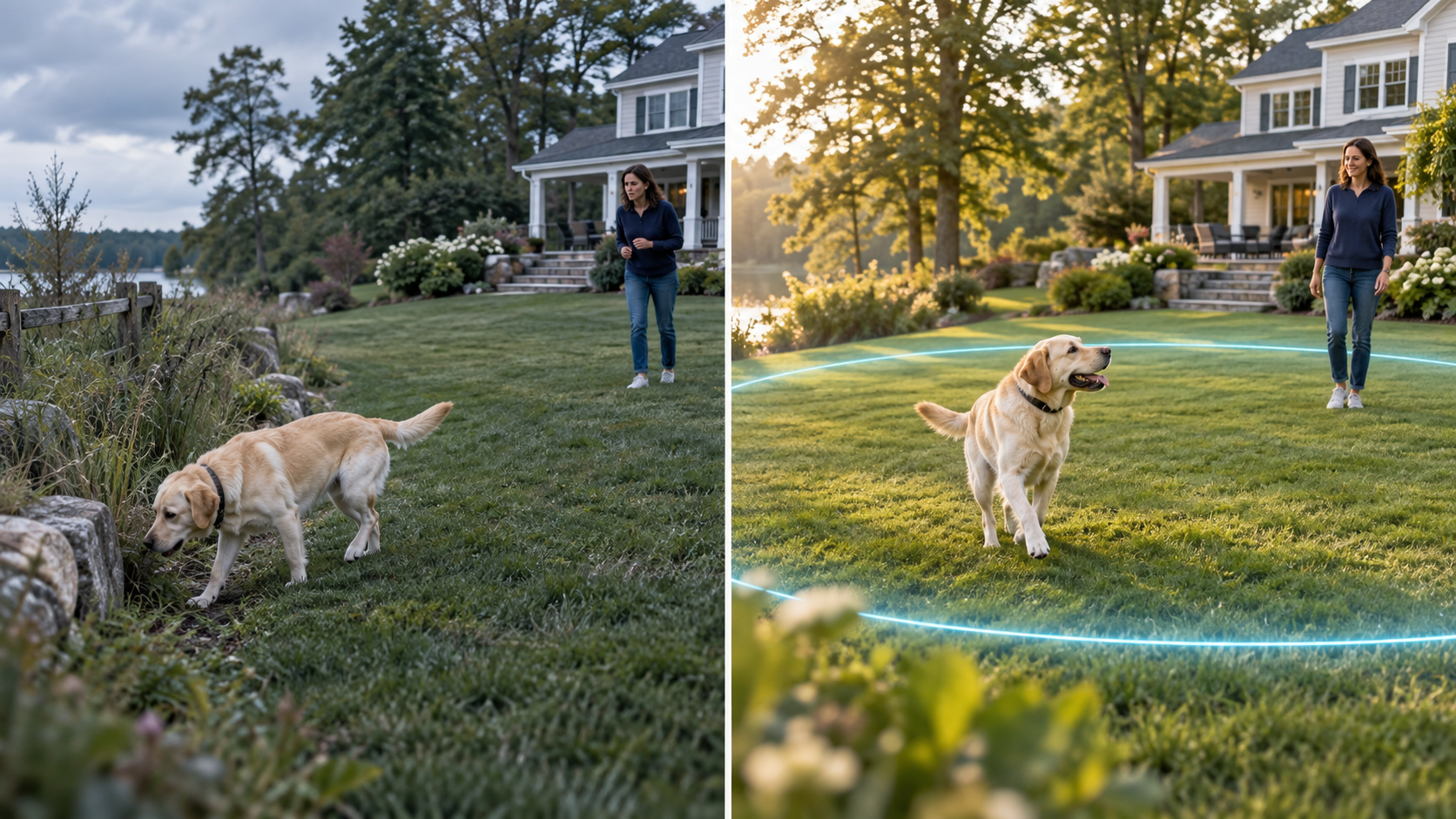
Why Are These Products Becoming More Relevant in 2026?
Pet technology is gradually moving from “knowing where the pet is” toward “helping owners manage their pets more effectively.”
In the past, many smart pet products had a very narrow purpose.
GPS meant location tracking.
A camera meant monitoring.
A collar meant wearing a device.
But as pets become more deeply integrated into family life, consumers increasingly expect one product to address a more complete usage scenario.
This is an important trend to watch in the future of smart pet devices:
Moving from single-function hardware toward practical management solutions.
For GPS collars, I believe future competition will not focus only on:
“Who can display the map?”
It will increasingly focus on:
What can the system do after locating the dog?
Can it help establish a safe boundary?
Can it support training?
Can it help the owner better understand the dog’s current status?
Does it require a complicated app, SIM card, or long-term subscription?
This is why I believe the product distinction between “GPS Tracker” and “GPS Dog Fence” will become increasingly clear.
One solves:
Find my dog.
The other focuses more on:
Manage where my dog should stay.
Users need to understand this difference first.
3 Practical Tips You Can Apply This Week
If you are considering using a GPS fence, you do not need to wait until the device arrives to start preparing.
You can complete the following three steps this week.
Tip #1: Walk the Future Boundary Yourself First
Do not start with the device.
Use your phone or a piece of paper.
Walk around the entire area where you want your dog to move.
Pay attention to:
Where the roads are.
Where the gates are.
Where neighboring properties begin.
Whether there are pools, construction areas, or other hazards.
Whether there is any direction where the dog should not be allowed to approach.
Expected result:
You will create a safer initial boundary instead of simply setting the largest possible range.
A larger boundary is not always better.
A reasonable boundary is what matters.
Tip #2: Do Not Train the Entire Circle During the First Week
This is a common mistake.
Once the GPS boundary is set, many owners assume the dog should immediately understand the entire activity area.
It can be much simpler.
Start with a small section of the boundary that is easy to control.
Let the dog approach.
Give the warning.
Guide it back.
Reward it.
Repeat.
Once the dog begins to respond consistently in that section, gradually expand the activity area.
Expected result:
The dog will have an easier time understanding:
What the warning means.
Instead of facing one large, invisible circle all at once.
Tip #3: Record 7 Consecutive Days Instead of Relying on Feelings
Spend one minute each day recording:
Where the dog approached the boundary.
Why it approached.
How far away it was.
What action you took.
Whether the dog returned.
After seven days, you may begin to see a pattern.
Perhaps the dog always crosses the boundary in one particular location.
Perhaps it loses control whenever it sees another animal.
Perhaps it moves farther away more often at night than during the day.
Expected result:
You will begin to understand what actually needs to be trained instead of simply increasing the stimulation level.
That is a completely different training approach.
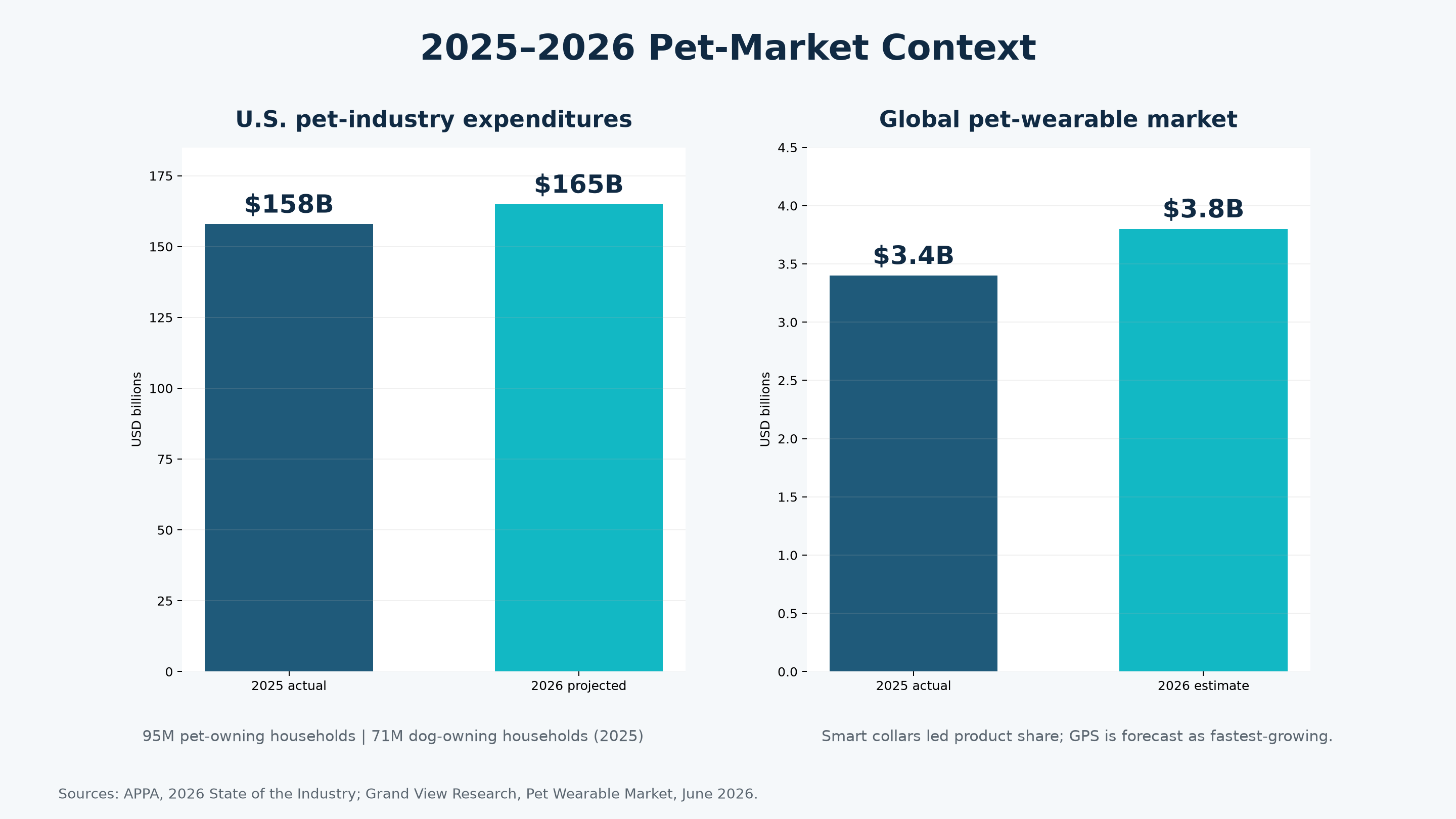
Key Takeaways
If you remember only a few points from this article, I hope they are these five:
First, a GPS Tracker and a GPS Dog Fence are not the same type of product.
One focuses more on finding.
The other focuses more on boundary management.
Second, GPS coordinates alone do not teach a dog anything.
A dog needs consistent, repeated warnings to develop an understanding of the boundary.
Third, boundary control can never be completely separated from training.
The device provides a tool.
But the owner still needs to establish the right training process.
Fourth, knowing the distance matters.
Especially on large properties, farms, and open land.
Fifth, the best pet-safety solution should not simply restrict the dog.
It should help create a better balance between safety and freedom.
#GPSDogFence #WirelessDogFence #DogTrainingCollar #PetSafety #PetTech #SmartPet #DogTraining #DogOwners #Naxwave #NaxwavePet
Explore GPS dog fence products